Keep Every Generation On-Brand with Brand Guides
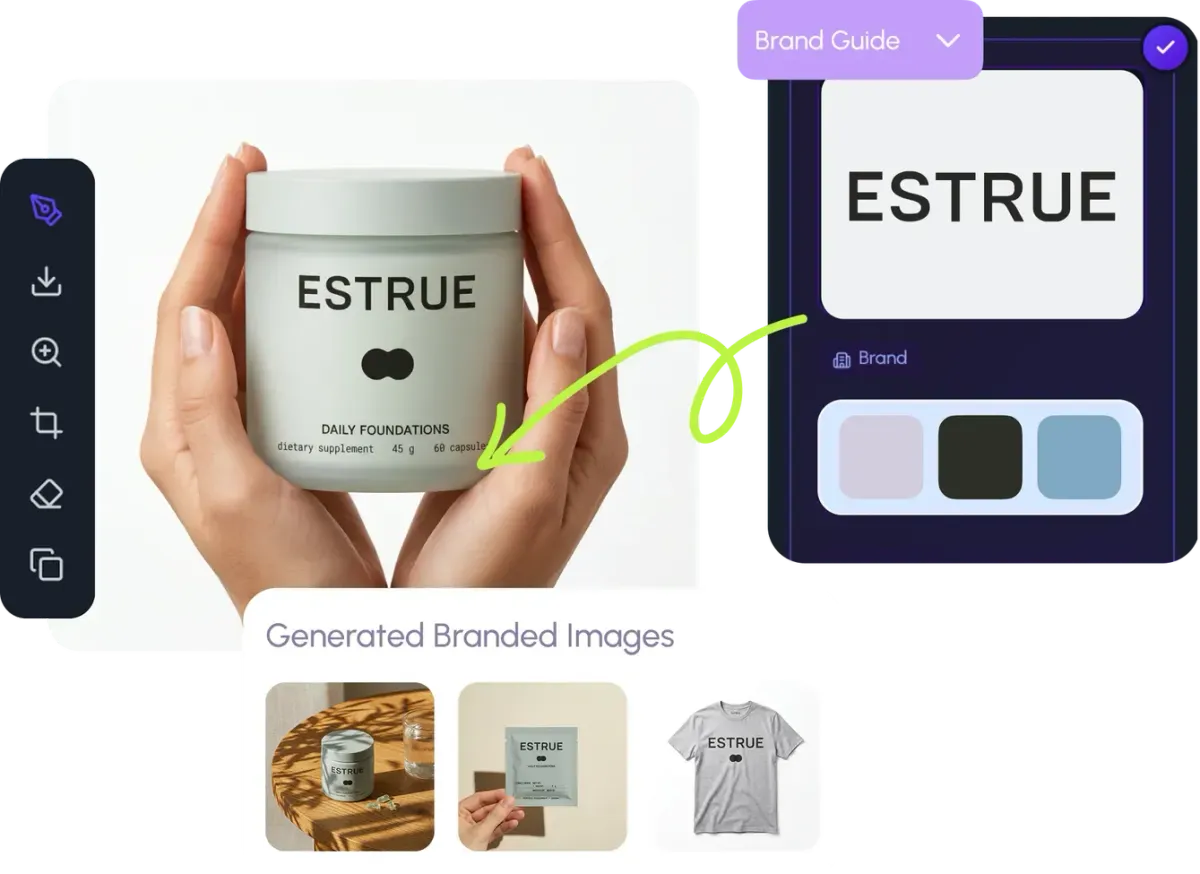
Brand guides keep logos, colors, and brand rules in one place. Artwork style guides capture artistic looks. Both help generations stay consistent without rewriting the same instructions every time.

Suppose your brand uses deep green packaging, warm cream backgrounds, and a restrained serif typeface.
You mention the green in a prompt, but the result comes back teal. The background is bright white. The type looks playful. It may be a perfectly good image, but it does not look like your brand.
Repeating a longer prompt can help, but then every teammate has to remember the same instructions every time. A brand guide gives those brand rules a permanent home inside Hiding Elephant.

Brand guides and artwork style guides
In Hiding Elephant, both live under style guides, but they solve different jobs.
A brand guide is for a company or product identity. Think logos, brand colors, fonts, messaging, and the visual rules that make something look like your brand.
An artwork style guide is for an artistic look. Think reference-based styles, creative direction, lighting mood, illustration feel, or a visual language that is not necessarily tied to a logo system.
Use a brand guide when the output needs to feel like a particular brand. Use an artwork style guide when you want to repeat a creative style across many generations. You can use both, depending on the work.
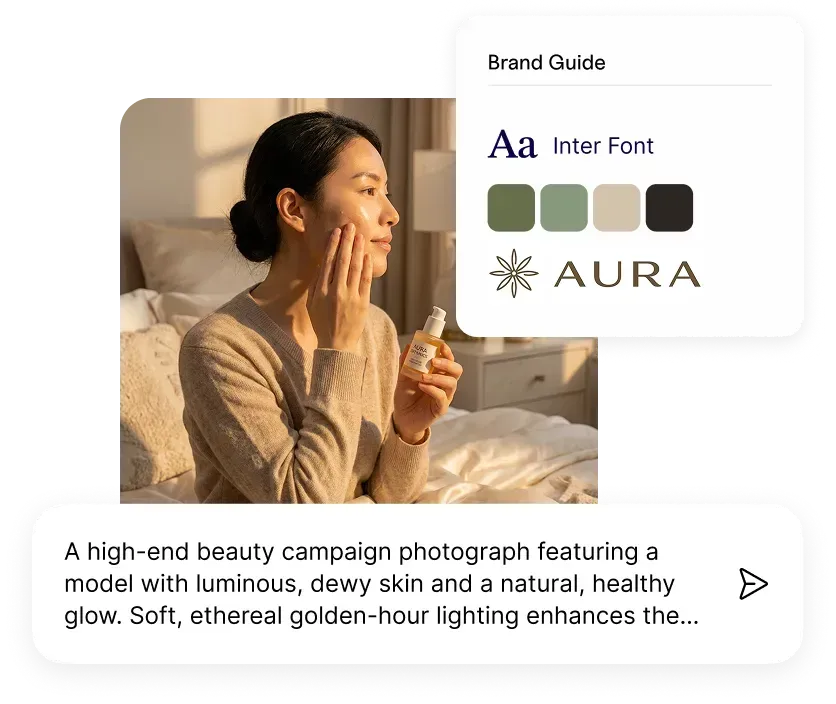
What goes into a brand guide?
A brand guide can include:
- Logos and approved variations
- Brand colors
- Fonts and typography choices
- Reference images that show the right brand direction
- Written guidance about tone, composition, and details to avoid
Those inputs are saved for reuse. When someone applies the brand guide to a generation, they are starting from the brand's real ingredients instead of reconstructing the look from memory.
What about artwork styles?
An artwork style guide is useful when the main goal is a look rather than a brand system. For example:
- Soft product photography with natural light
- Flat editorial illustration
- A cinematic ad style you want to reuse across a campaign
You can build that from reference images and custom design rules. It helps keep the artistic direction consistent, even when the brand identity itself is handled separately.
A practical example
The coffee brand from the opening could create a brand guide with its dark green and cream palette, approved logo, fonts, and a note such as:
Use warm natural light, quiet compositions, and tactile materials. Avoid saturated colors, glossy plastic surfaces, and playful display type.
If the team also likes a specific photographic mood for summer ads, they can save that as an artwork style guide and apply it when they want that look.
Now a marketer making a social post and a designer exploring a campaign can start from the same brand rules, and optionally the same artistic direction, without rewriting the brief every time.
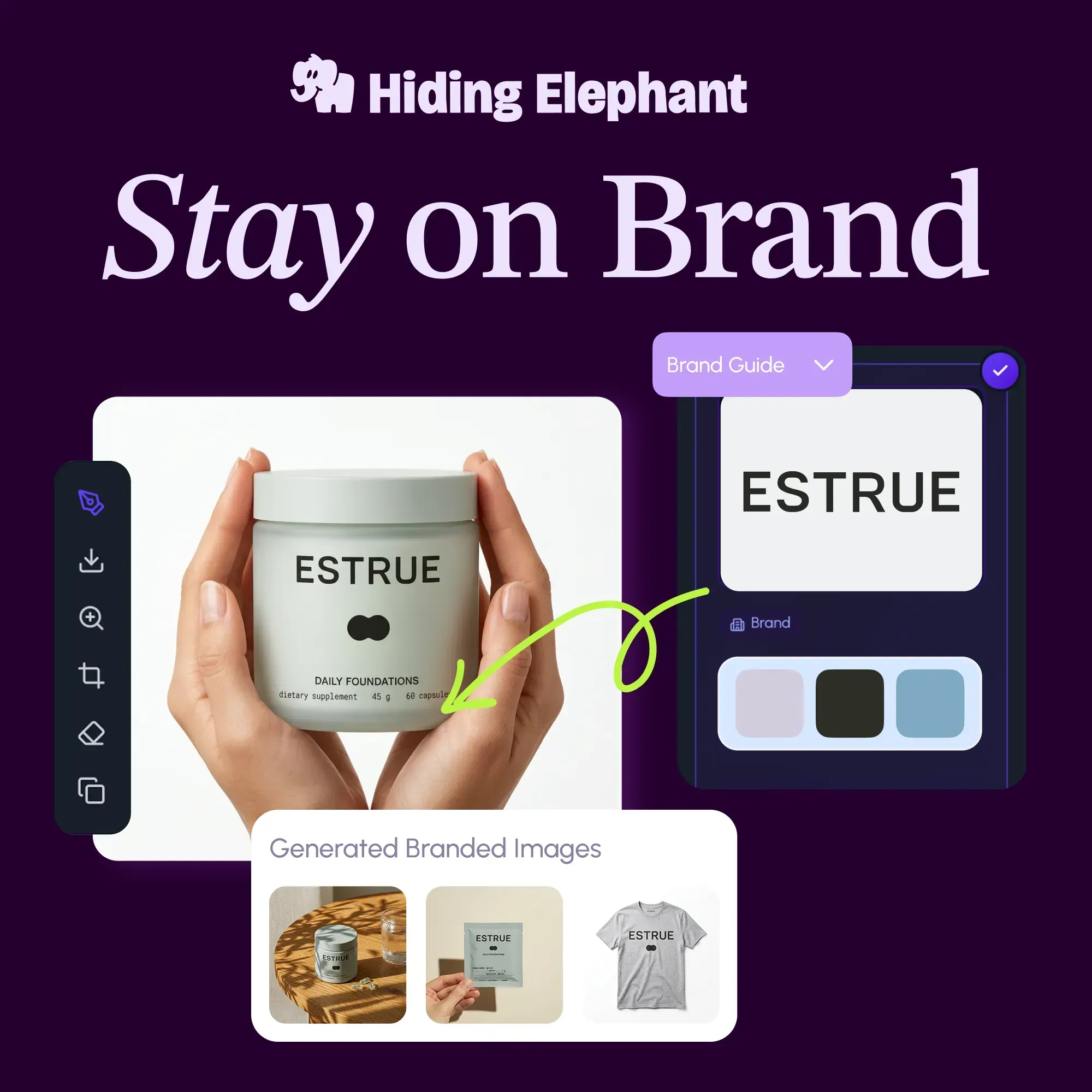
Ellie gets smarter as you use it
Brand guides and artwork style guides sit inside Brand Intelligence, alongside your products and reusable assets.
As you add more of that context and keep creating with it, Ellie has a clearer picture of your brand and style. Over time, generations feel less like starting from scratch and more like continuing from what your team already knows.
Start with the brand rules people get wrong
For an individual designer, a brand guide saves repeated setup. For a team, it also reduces interpretation. A new teammate does not need to find an old brief or ask which logo file is current before making a first draft.
It will not make every result identical, and that is not the point. It gives exploration useful boundaries.
You can create a brand guide or artwork style guide in Brand Intelligence, then apply it while generating on the canvas. If you are just getting started, begin with the brand pieces people get wrong most often: logos, palette, a few strong references, and a short list of things to avoid.
That is often enough to turn "close to our brand" into a much better first draft.